
English
HIKE! TOKUSHIMA ~Climbing Mount Nakatsumine~
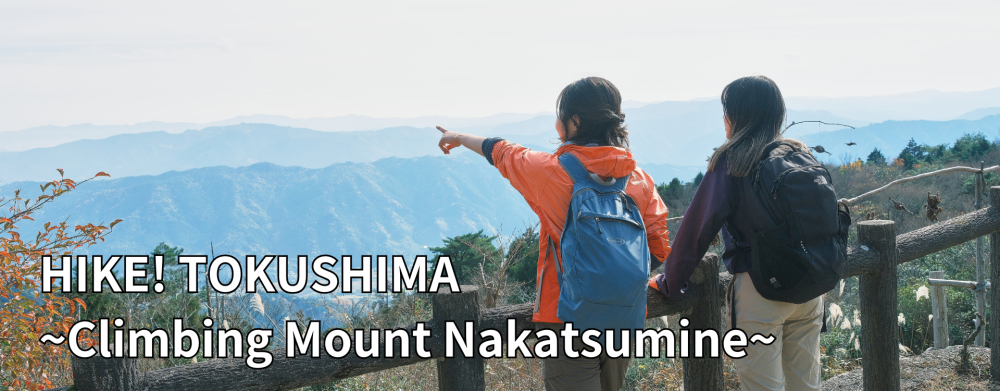
Roughly 80% of Tokushima Prefecture's land is mountainous, offering a variety of large and small mountain climbs. The "HIKE! TOKUSHIMA" project, launched in 2021, aims to promote the mountains of eastern Tokushima to mountaineering enthusiasts in Japan and abroad. These mountains are already popular among local hikers and trail runners.
This time, we'll introduce Mt. Nakatsumine, which straddles Tokushima City and Katsuura Town and offers outstanding views.
Aim for the summit to enjoy a spectacular panorama!
Located at 773 meters above sea level at the easternmost point of the Tsurugi Mountain Range, Mt. Nakatsumine boasts the highest peak in Tokushima City. Along with Mt. Hinomine in Komatsushima City and Mt. Tsunomine in Anan City, it is known as one of the Awa Three Peaks. Trails to the summit are maintained on all sides, allowing you to choose a route that suits your physical ability and goals.
This article introduces a 4.3-kilometer, beginner-friendly route that starts at Hoshi no Iwaya (Shokokuji Temple) in Katsuura Town, passes through the summit, and ends at Mt. Nakatsumine Nyoirinji Temple. The entire hike takes about four hours, including breaks and sightseeing.
The best time to hike is in early December when the autumn leaves at Hoshi no Iwaya are at their peak. It is also the height of Katsuura Town's mandarin orange season, so you can enjoy views of mandarin orange orchards along the way.
Depart from Hoshi no Iwaya, where a mystical view unfolds
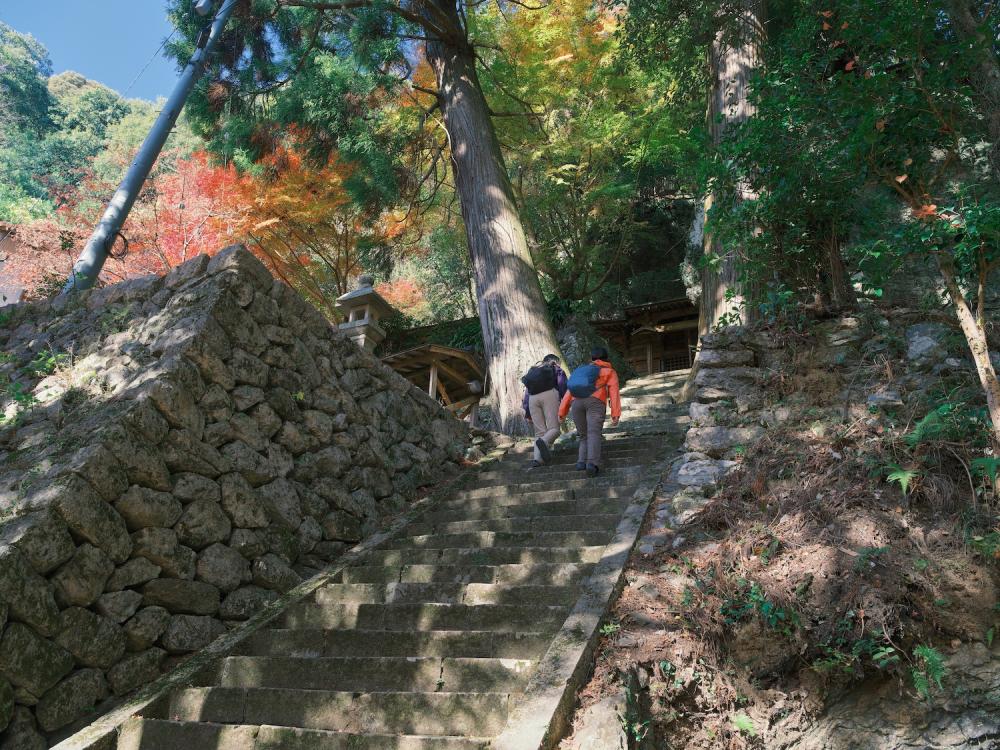
Hoshi no Iwaya is the inner sanctuary of Temple no. 19, Tatsueji Temple in Komatsushima City. Legend has it that long ago, an evil star was bringing misfortune to the people, so Kobo Daishi pulled it down to earth and sealed it in a cave where it turned to stone. This stone was then enshrined in the cave.
When you arrive at Hoshi no Iwaya, visit the main hall first. Then, climb the staircase lined with pairs of large cedar trees.
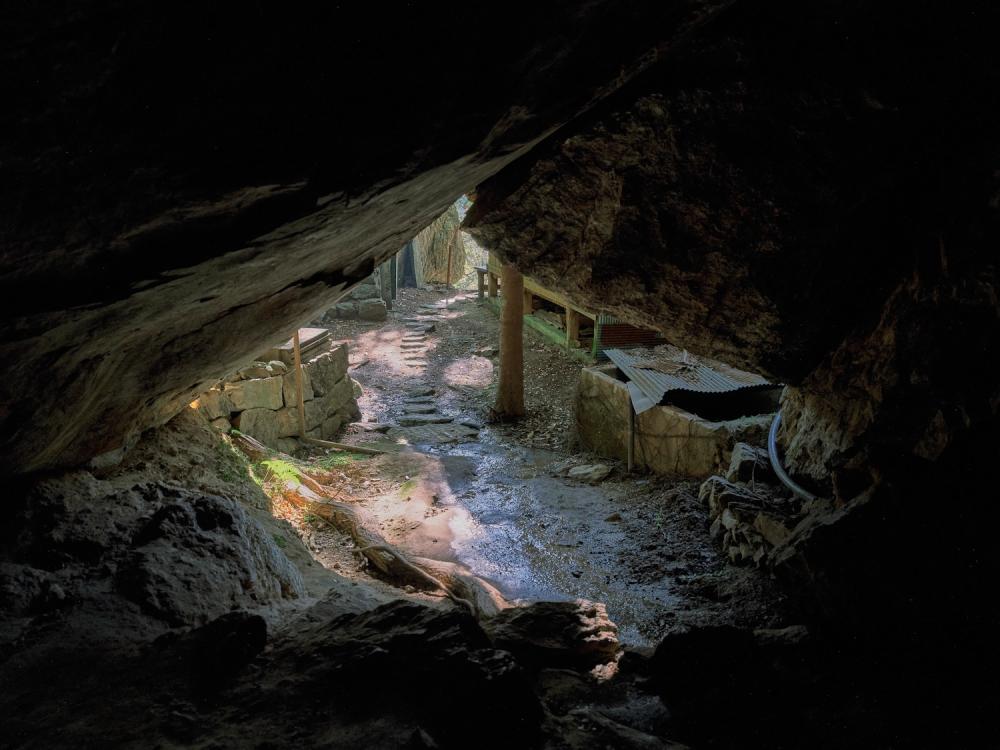
To the far right of the main hall, there is a cave that you can enter. It is a mysterious space with a cool, refreshing breeze.
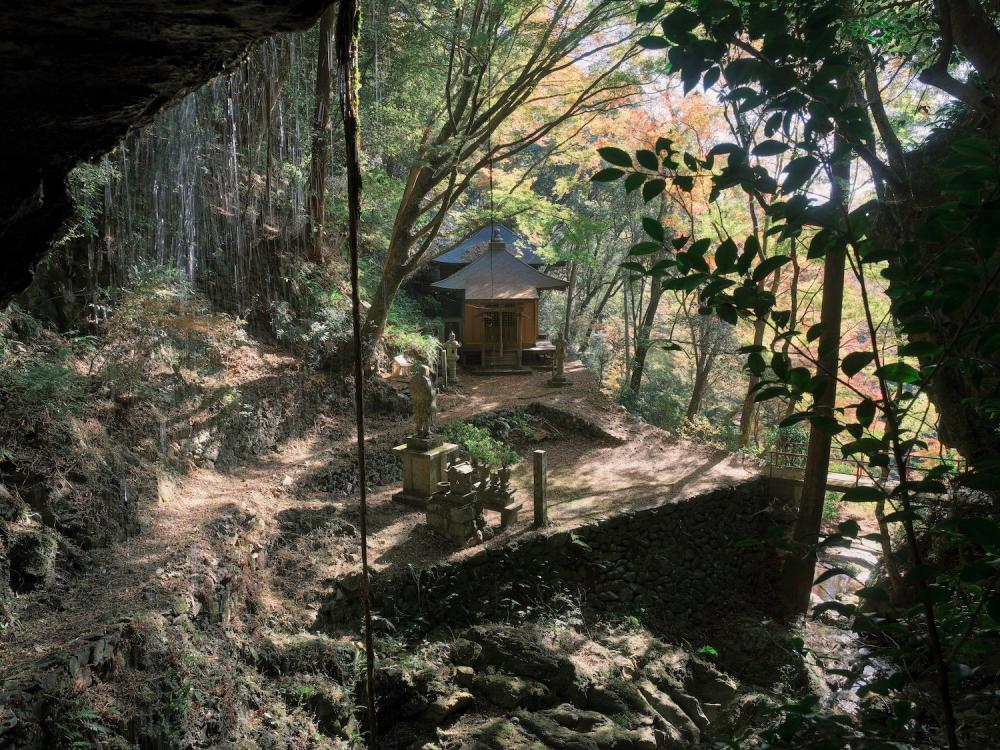
The cave has a large opening, allowing you to enjoy a beautiful view from inside.
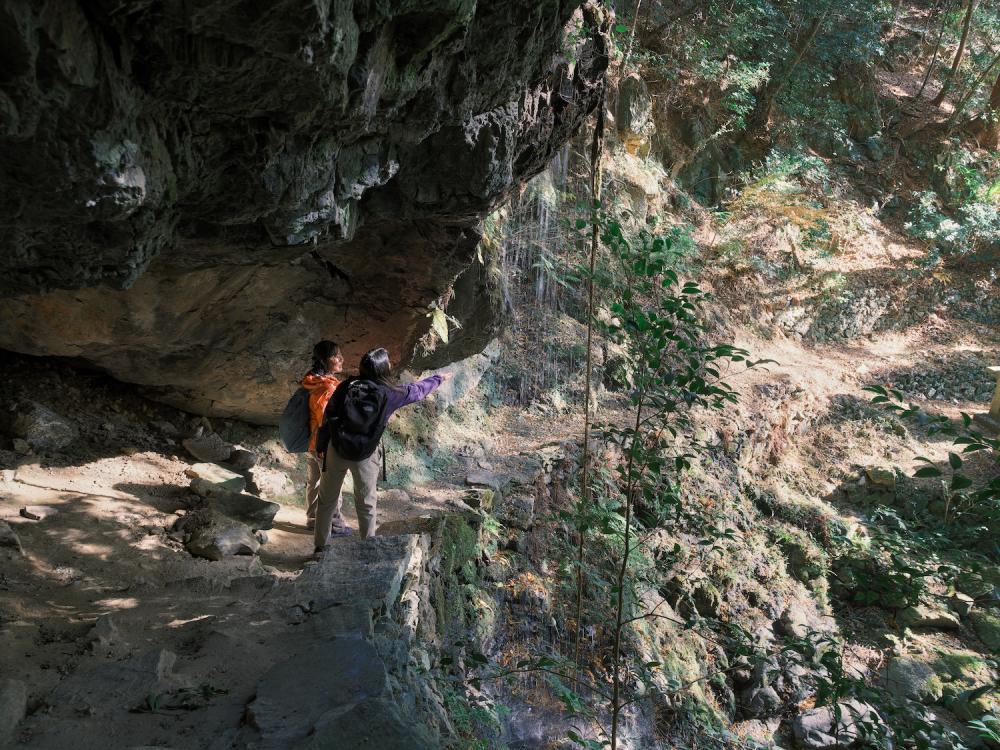
The "Fudo Falls," which flow down into the opening, are also known as the "Ura-mi Falls" because they can be seen from behind. It's so close that you could almost reach out and touch it!
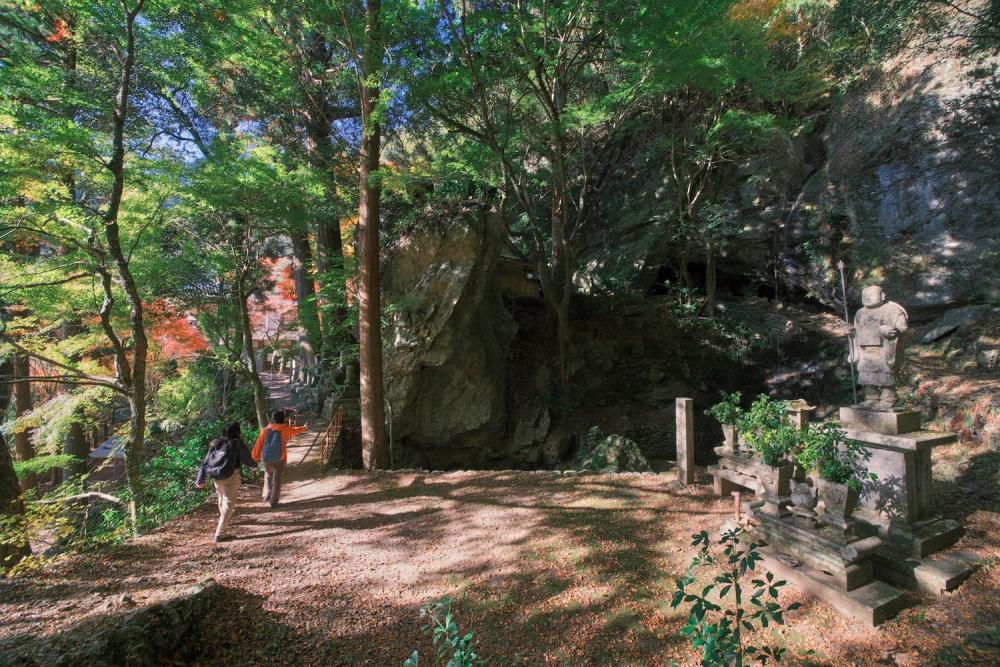
Exit the cave and return to the stairs leading to the main hall.
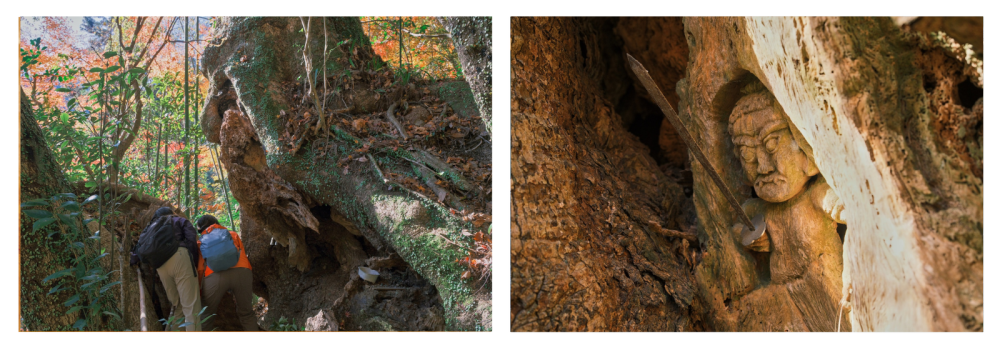
Just before the stairs, you will see the "Live Immovable Camphor Tree," a 450-year-old camphor tree with a statue of Acala carved into its trunk. You can peek inside from behind the tree and pray.
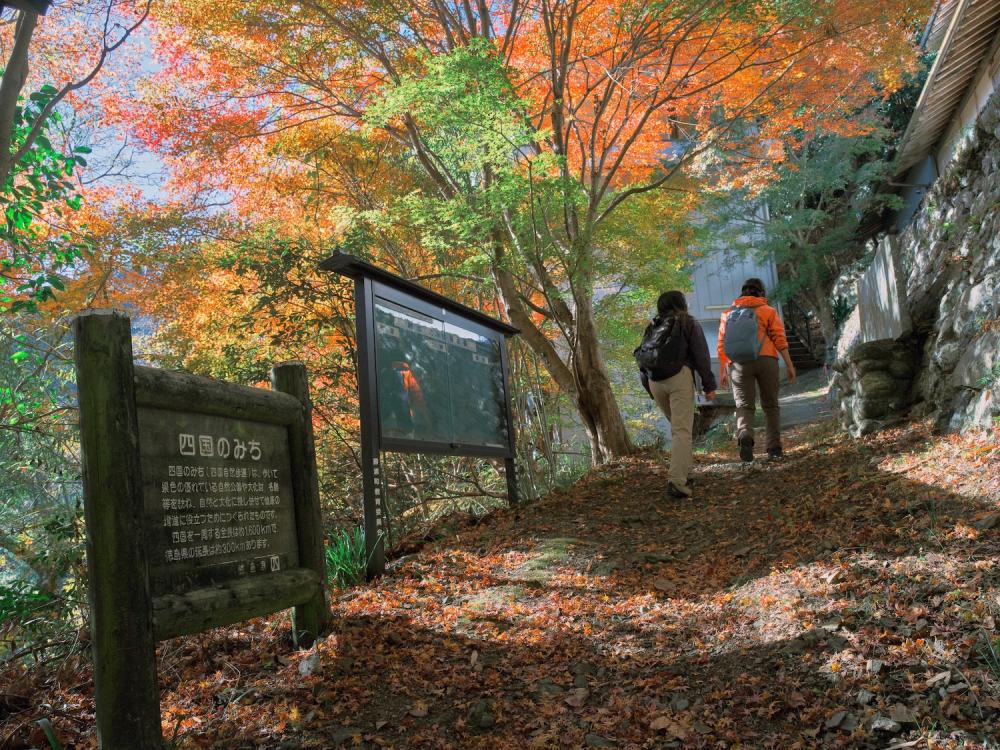
Cross the stairs and go further in with the notice board on your left. From here, head for the summit.
The "Buddha Stone" stands quietly deep in the mountains.
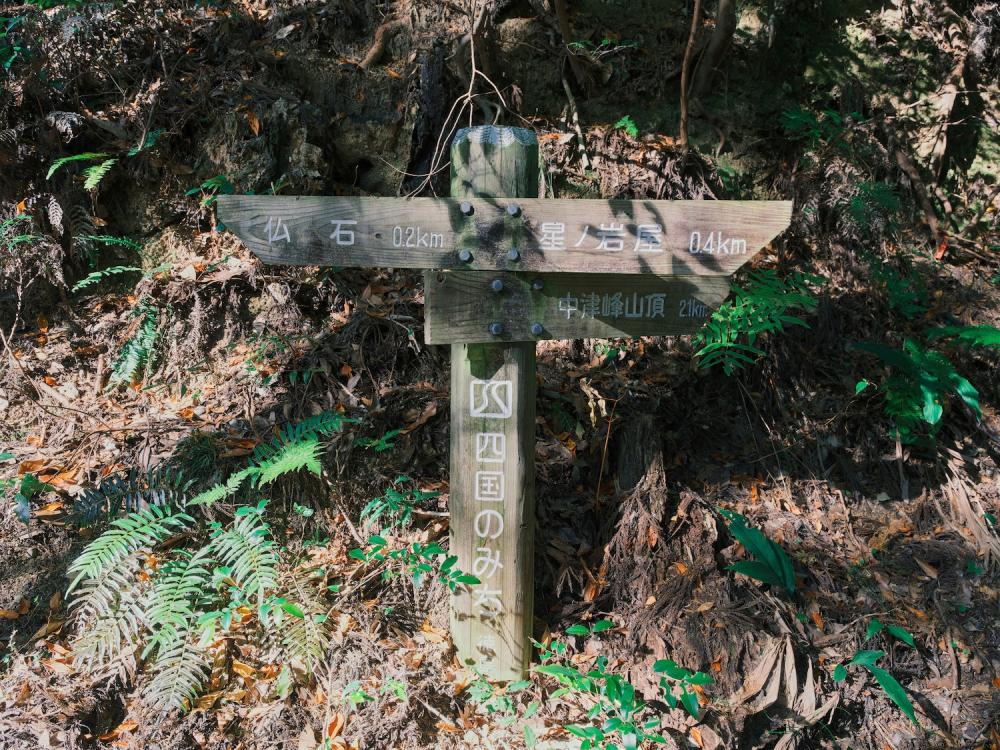
After walking along the mountain trail for a while, you will reach a fork in the road. There, you will see a sign for "Shikoku no Michi." If you go right, you will reach the summit. However, we will take a detour to see the Buddha stone.
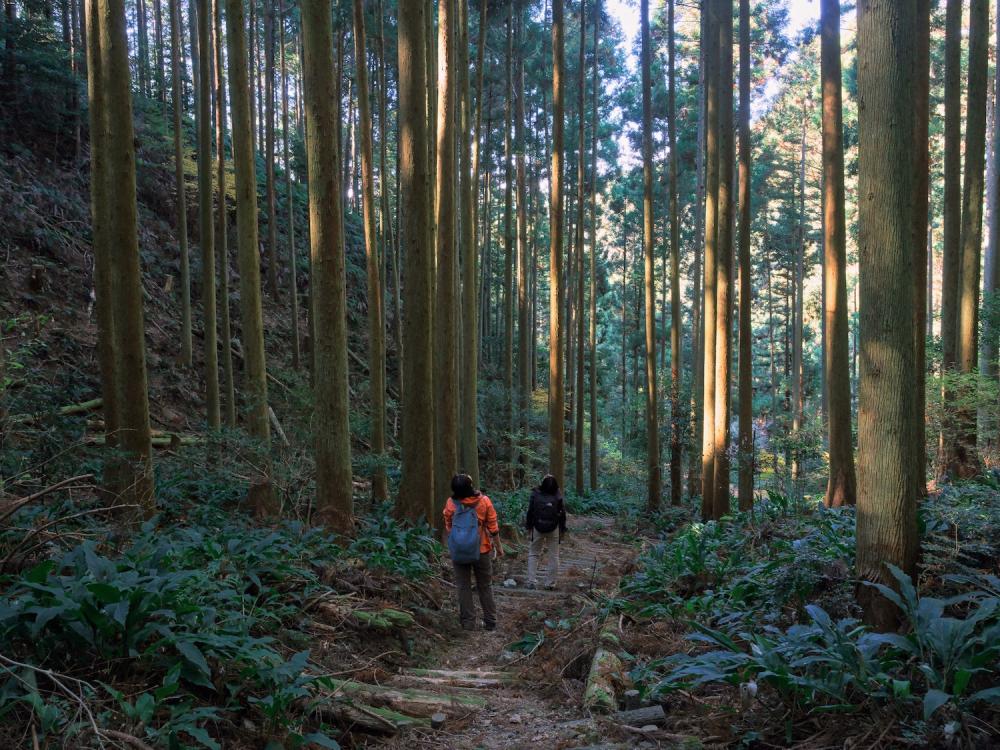
Continue downhill until you reach a paved road. Follow the road ahead. You will then see a sign for the Buddha Stone on your left. Go down the stairs.
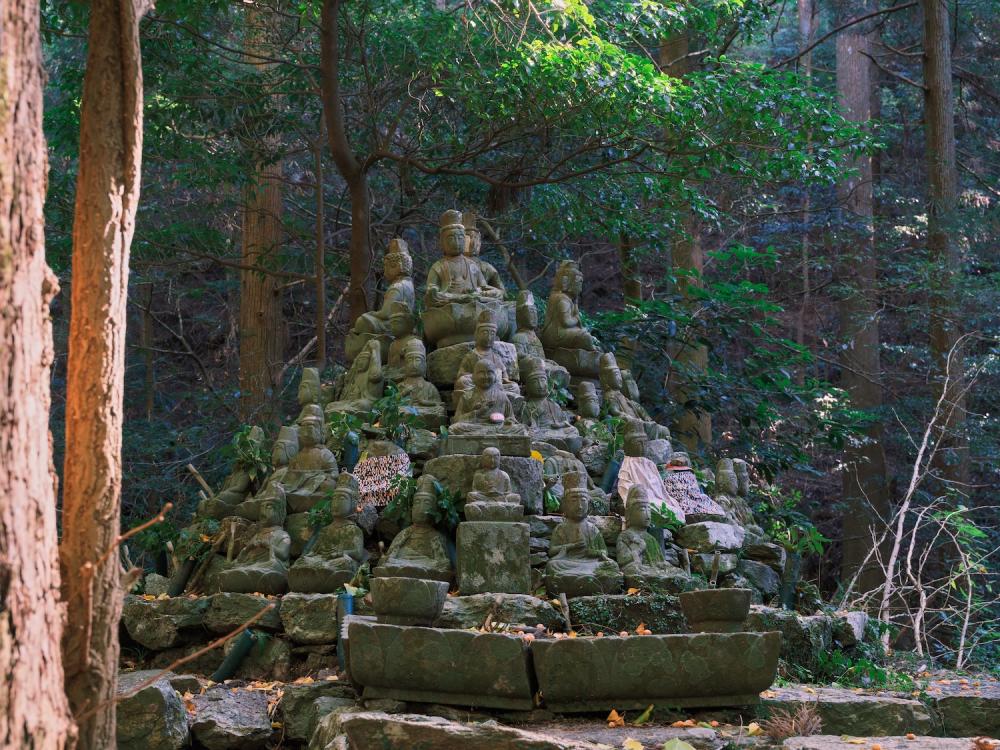
At the bottom of the stairs sits Buddha Stone, a cone-shaped statue depicting several Buddhas.
The legend of Kobo Daishi also remains here. When Kobo Daishi visited the area, he saw a bright light on the mountain and climbed up. Suddenly, an enormous rock over 150 meters high appeared, and Daishi worshiped the Buddhas of the Ryōkai Mandala. Delighted by this, Daishi encouraged people to follow his faith.
Later generations saw this as an auspicious occasion and carved 73 Buddha statues, which they enshrined on the rock.
Finally, we head to the summit of Mt. Nakatsumine
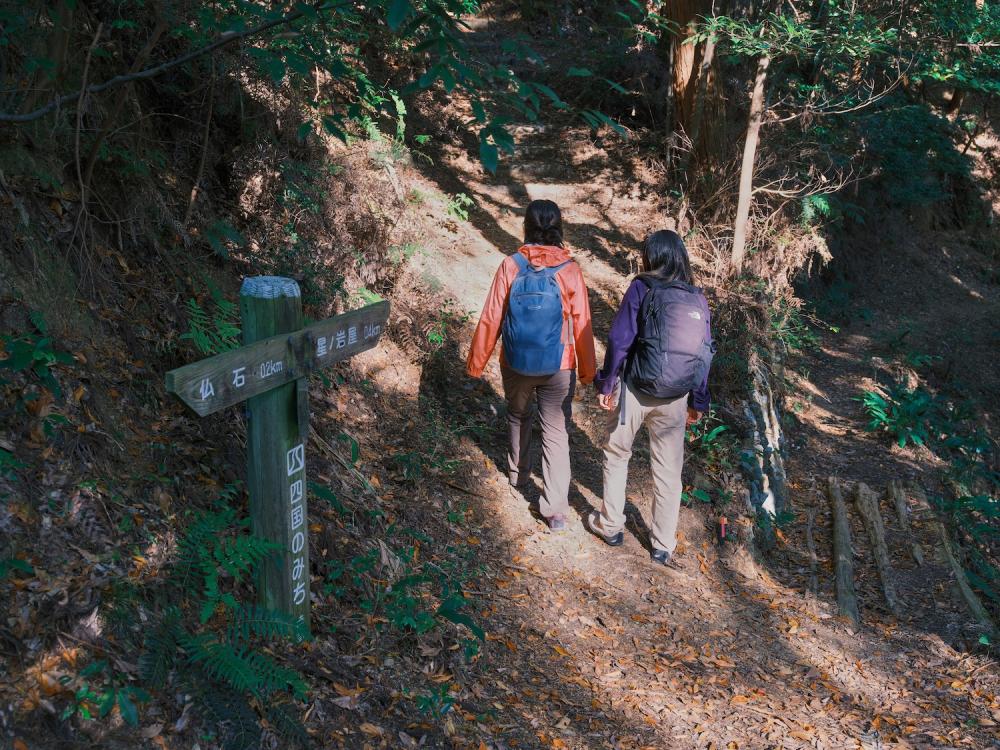
Head back the way you came and make your way to the summit of Mt. Nakatsumine. The summit is about 2.1 kilometers away.
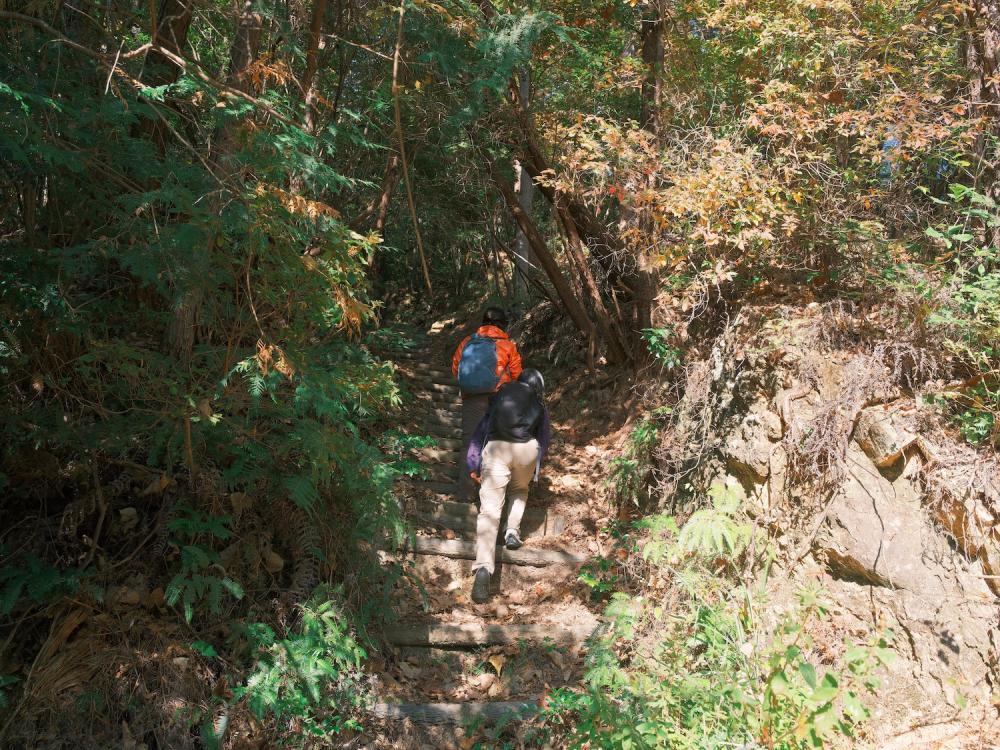
Most of the way to the top is stairs, and there are several benches along the way where you can take a break.
Magnificent views await at the top
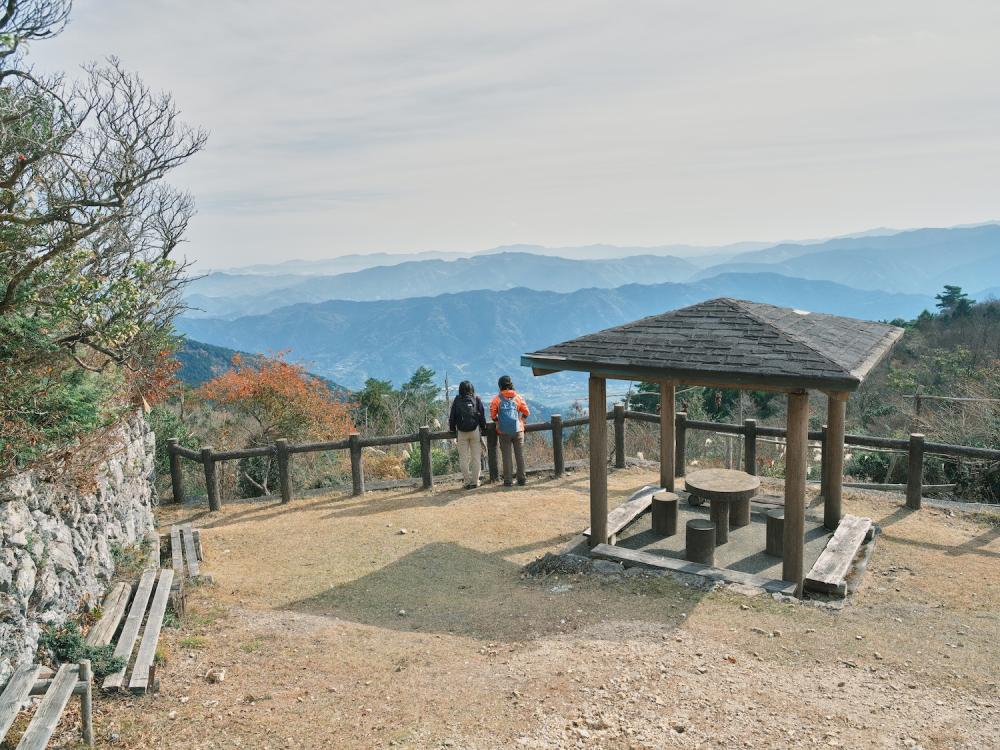
We finally made it to the top! There is a covered rest area that's perfect for having lunch. There are also handmade benches and sculptures, showing that this place is beloved by the locals.
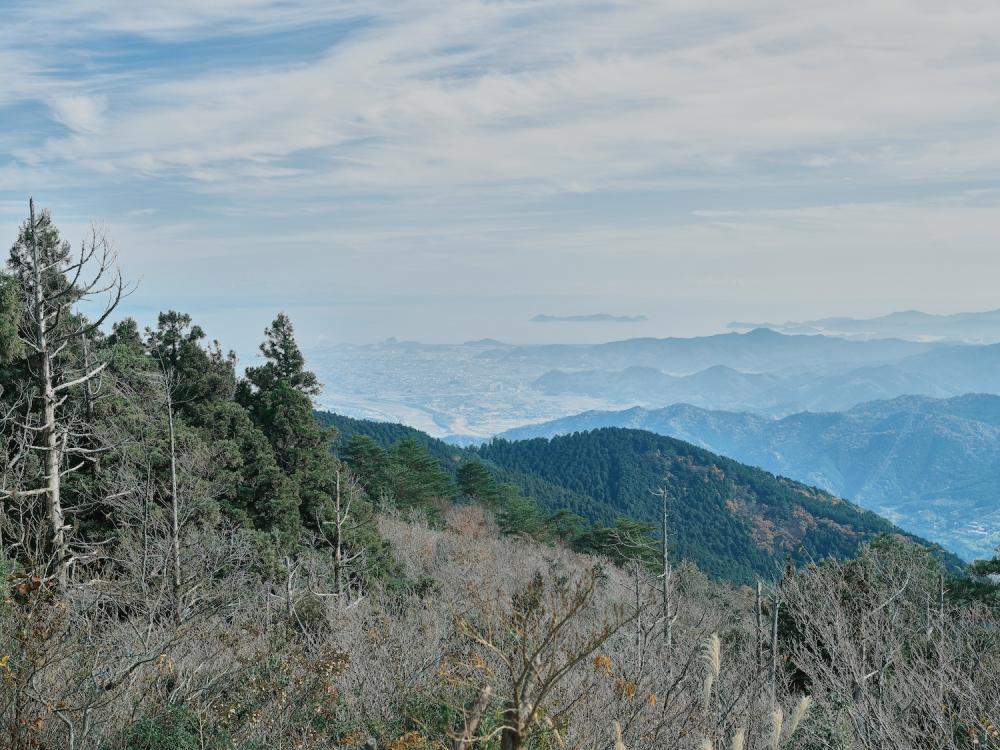
From the summit, Katsuura Town is visible in the foreground, with Komatsushima City and Anan City visible in the background. On a clear day, the view of the Kii Channel in the distance is outstanding.
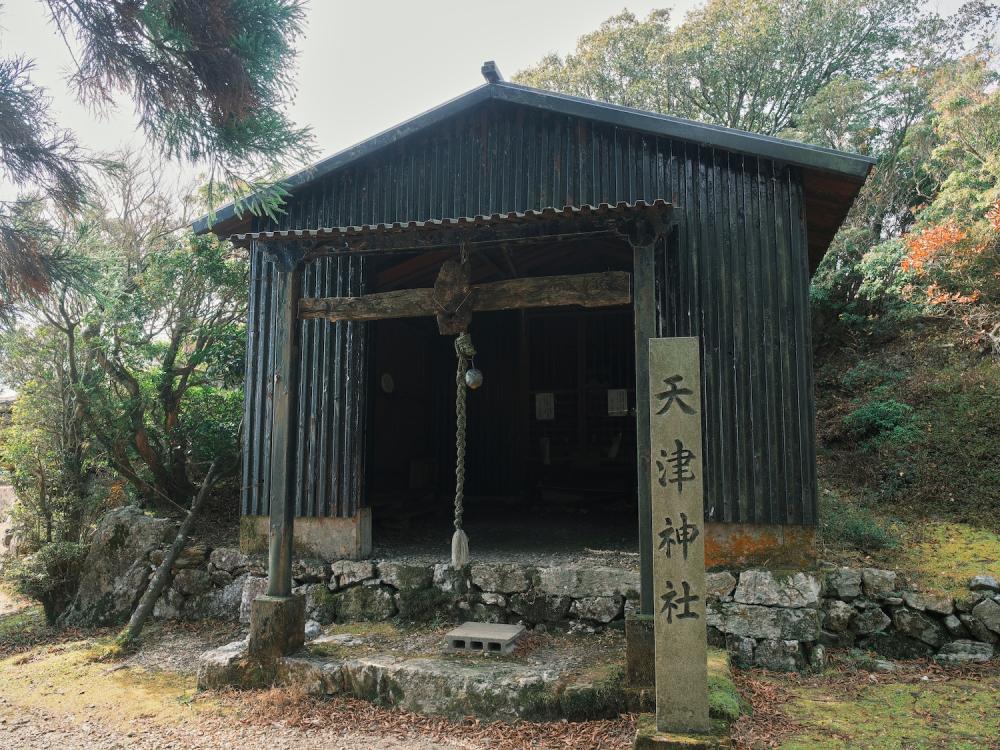
At the back of the rest area stands the Amatsu Shrine. Its stone windbreak wall exudes a solemn atmosphere that will catch your eye.
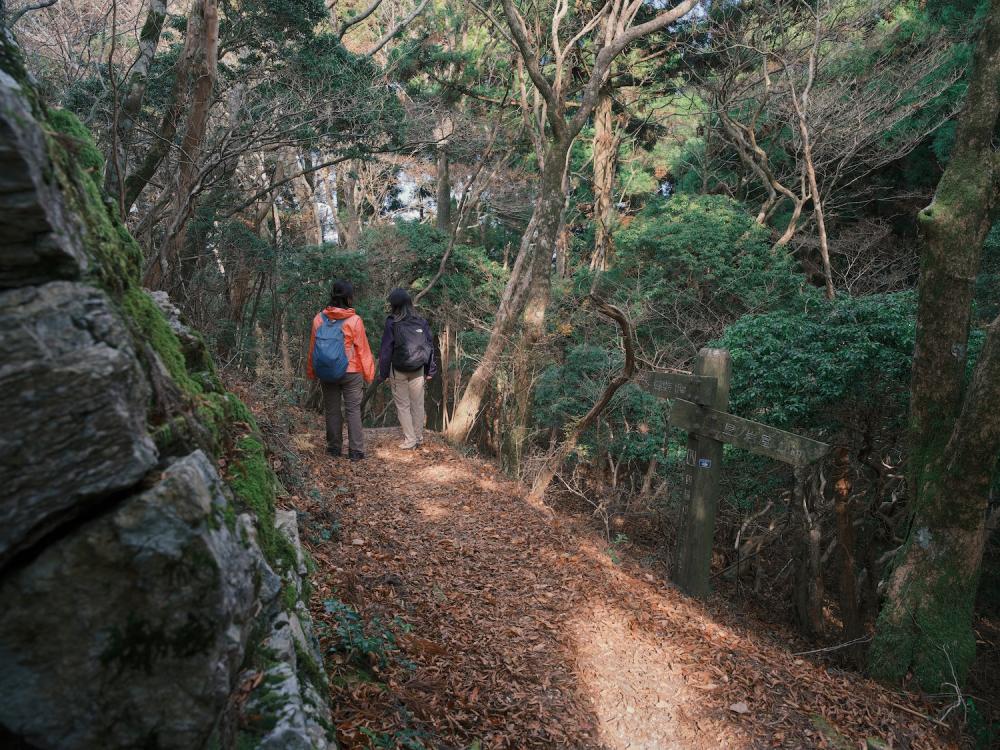
Turn back here! With the stone wall behind you, turn left and head toward Nyoirinji Temple. You will see a continuous, downward-sloping staircase.
Head to Nyoirinji Temple, an ancient temple on the slopes of Mt. Nakatsumine
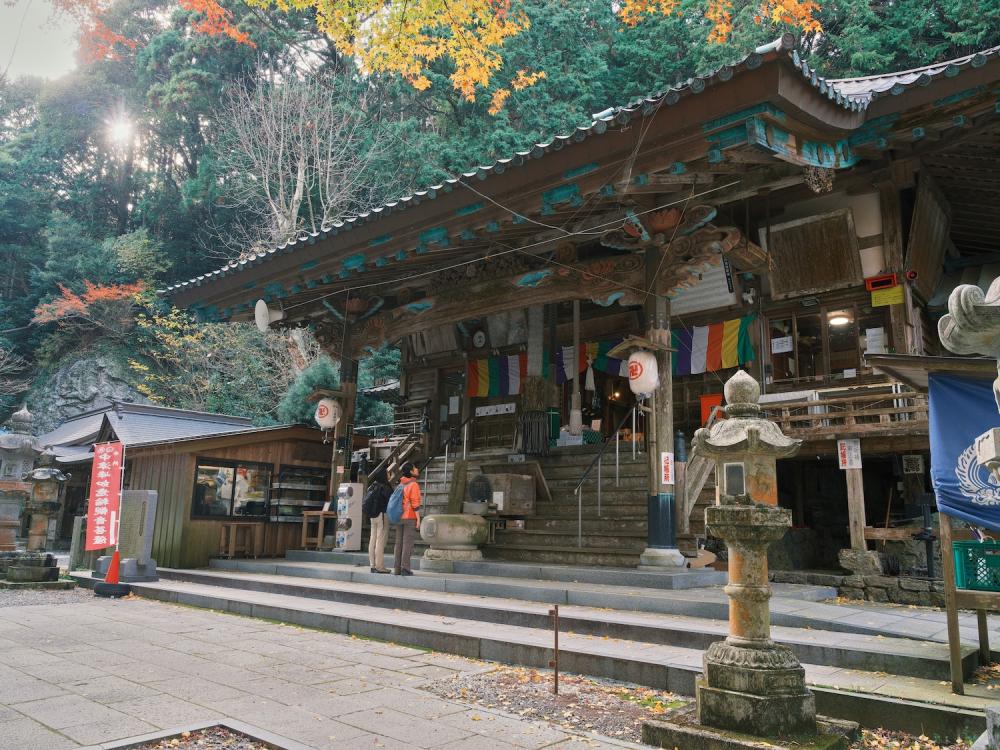
After a 30-minute walk, you will arrive at the Nyoirinji Temple on Mt. Nakatsumine, which resembles Mount Fudaraku, where Kannon Bodhisattva is said to have descended. This makes Mt. Nakatsumine a sacred mountain and a beloved holy place for Kannon worshippers.
The temple's main statue, Nyoirin Kannon, is a nationally designated Important Cultural Property said to grant blessings such as home safety, business prosperity, wish fulfillment, and recovery from illness.
The statue was once worshiped by the Hosokawa and Hachisuka families for prosperity and is said to bestow blessings such as good fortune, wish fulfillment, and career advancement.
The carvings in the main hall adorned with lotus flowers held by Kannon are captivating.
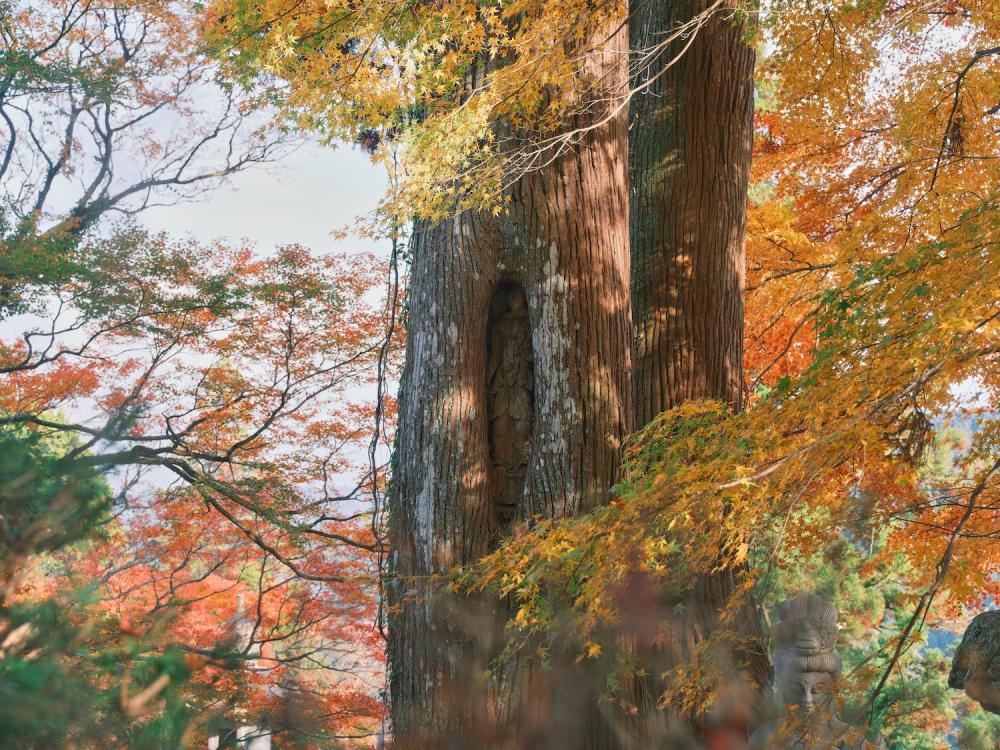
When visiting Nyoirinji Temple, be sure to see the "Tachiki Kannon," a statue of the temple's principal image, Kannon Bodhisattva, carved from a living cedar tree during the Taisho era (1912-1926). Yokoyama Tennen Koji, the third son of Ningyochu, one of Awa's leading doll makers, carved it. Although the face is not visible, the intricate details of the clothing offer a glimpse into the exceptional skill involved.
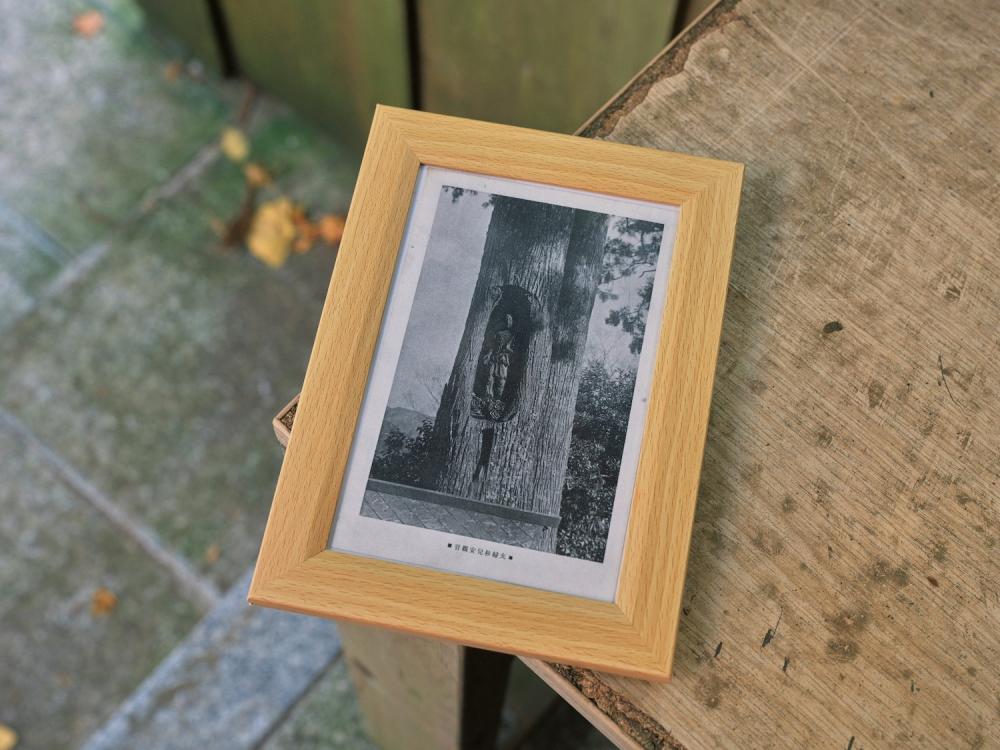
This photo, taken 20 to 30 years after the carving, shows the living tree attempting to repair the hole by pulling the Kannon statue inside.
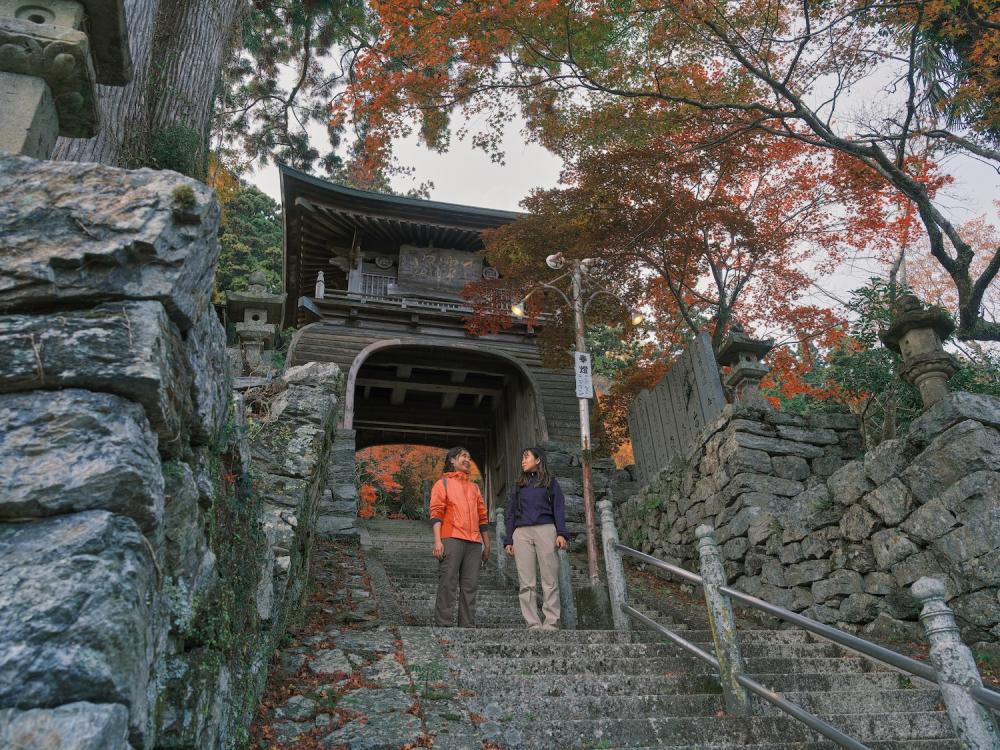
This is the bell tower gate of Nyoirinji Temple, shaped like the Ryugu-gata, or Dragon Palace. Unlike most Ryugu-gata gates, which have a plastered first floor, this one is made entirely of wood.
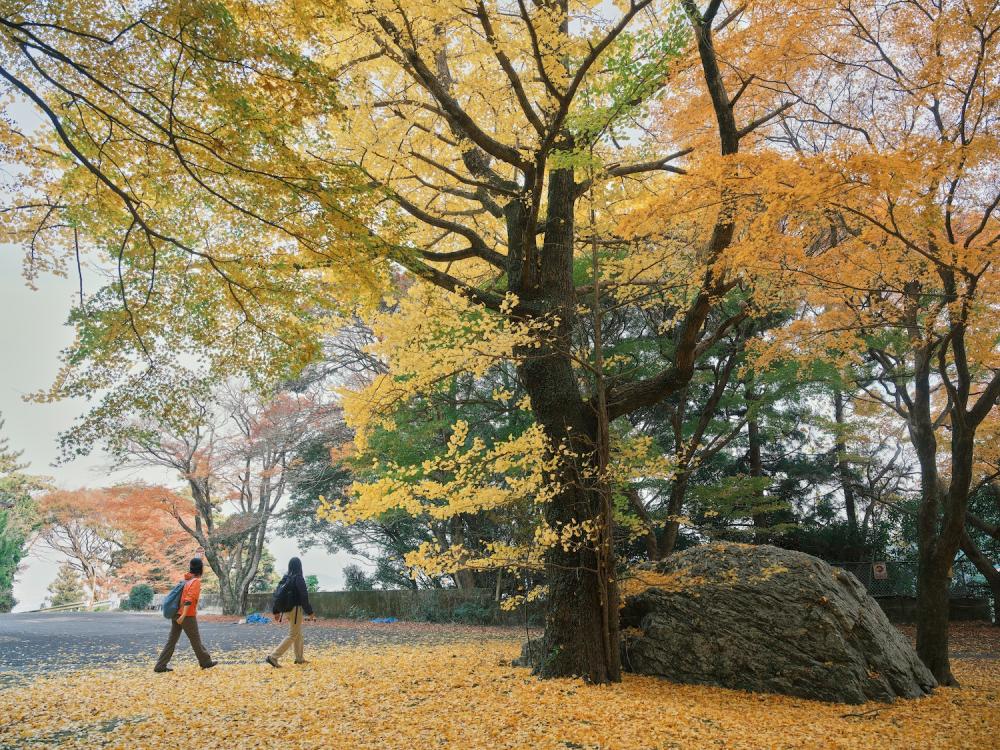
The destination is a large ginkgo tree located in the parking lot of Nyoirinji Temple. The entire area is covered in a golden carpet that will help you relax and unwind after your journey.
Hoshi no Iwaya
126 Hoshitaninodao, Katsuura Town, Katsuura-gun
The best time to see the autumn leaves is early December.
Nyoirinji Temple
2-2 Nakatsu, Takara-cho, Tokushima City
Tel: 088-645-0008
https://nakatsumine-nyoirinji.com/
The best time to see the autumn leaves is late November.
For route details and other information, please look at “HIKE! TOKUSHIMA” webpage.
https://www.east-tokushima.jp/trail/mtnakatsumine.php