
English
The Submersible Bridges of the Yoshino River
The Yoshino River, which flows west to east across Tokushima Prefecture, is home to eight "Sensuikyo"—submersible bridges.
Although today the river seems very gentle and no floods have occurred for years, in the past, due to the river's steep gradient, the rainwater reached the lower basin rapidly, posing a high risk of overflow and flooding. In the Edo period (1603-1868), floods were said to occur as often as once every two years.
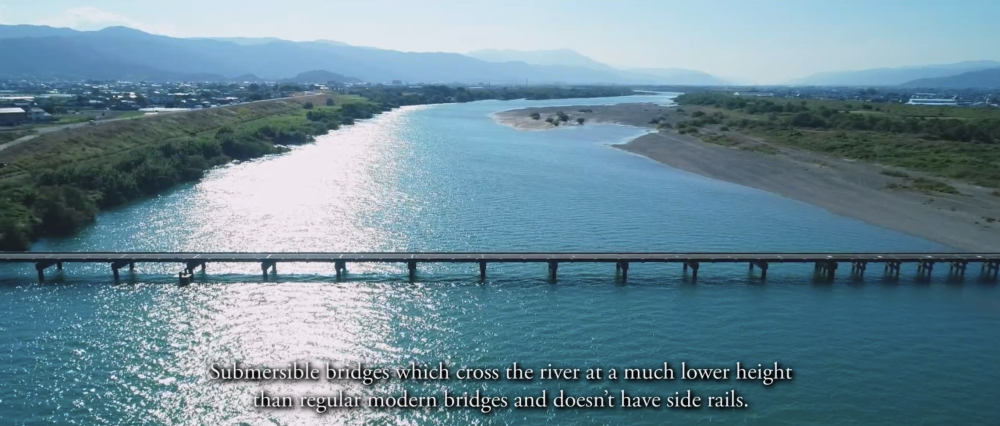
The difference in water volume between the Yoshino River's low and high water marks is nearly four times that of the Tone River (which flows through the Kanto region and the Tokyo metropolitan area). Although the Tone River is famously nicknamed "Bando Taro" and feared as a "wild river" for its destructive power, the Yoshino River's fluctuations are far more extreme. This is why it is arguably the most difficult river in Japan to manage for flood control.
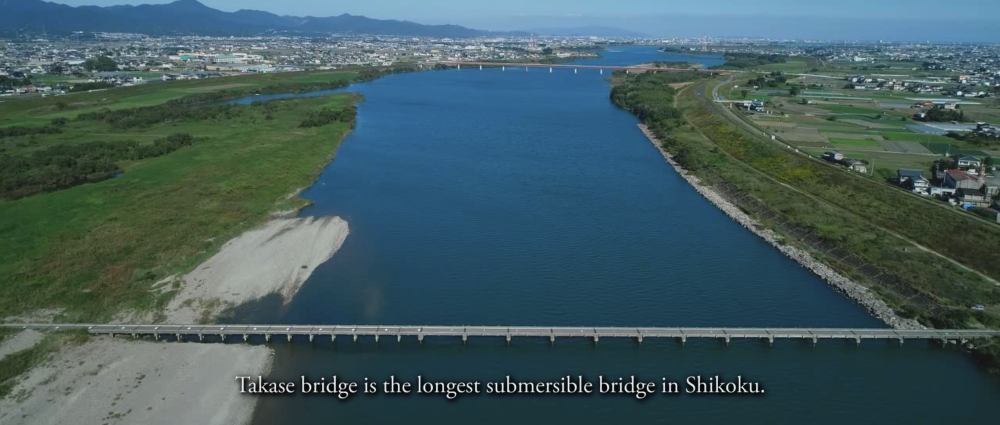
Since conventional bridges would easily be swept away by the current, submersible bridges were designed. They are engineered to disappear beneath the water level during heavy rain to prevent the structure from being washed away.
Submersible bridges are built lower than the river banks on both sides. A key feature is the absence of railings, which prevents driftwood and debris from getting caught and putting excessive pressure on the structure.
Their nostalgic charm has made them popular as photography spots and filming locations.
In addition to serving as essential local roads, several of these bridges are part of the Shikoku Pilgrimage route. The scenery from these low-lying bridges, where the water feels close at hand, offers a sense of tranquility to pilgrims traveling on foot.
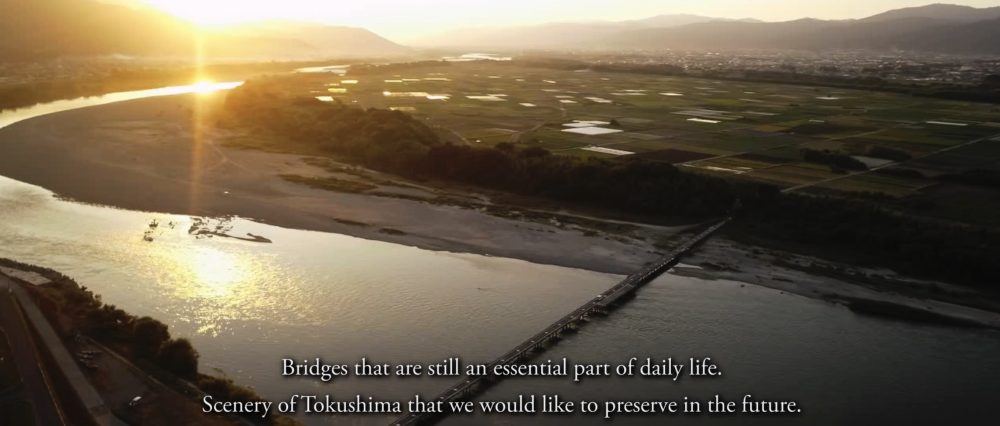
Submersible Bridges of the Yoshino River (As of April 2026)
Wakimachi Bridge
Ohnoshima Bridge
Kawashima Bridge
Senda Bridge
Gakushima Bridge
Gakuhoku Bridge
Kami Bridge
Takase Bridge
■ Tokushima: A Bridge Museum (Tokushima Prefectural Government)
https://www.pref.tokushima.lg.jp/bridge/